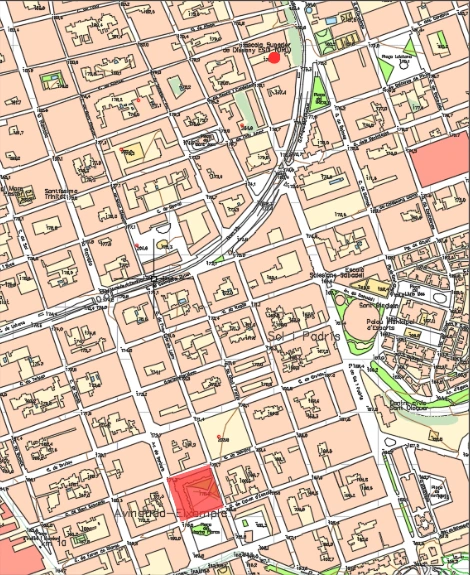
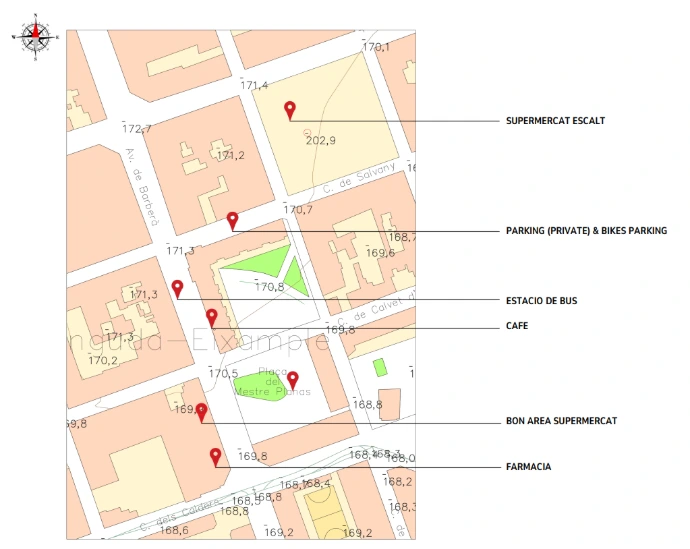
SURROUNDINGS OF PLAZA MONTSERRAT I ROIG
TOPOGRAPHIC PLAN OF SABADELL CENTRE
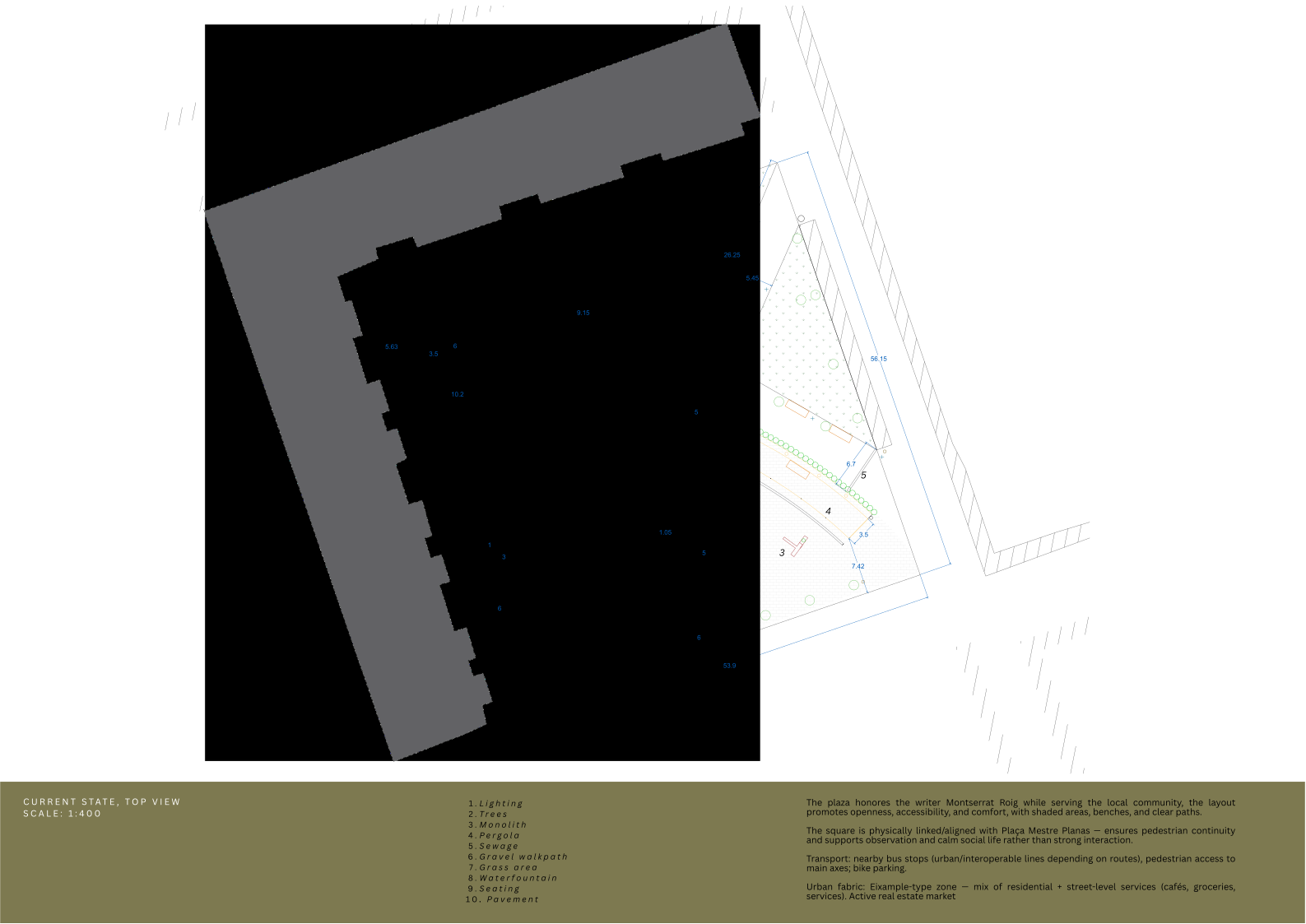
ANALYSIS OF THE SPACE
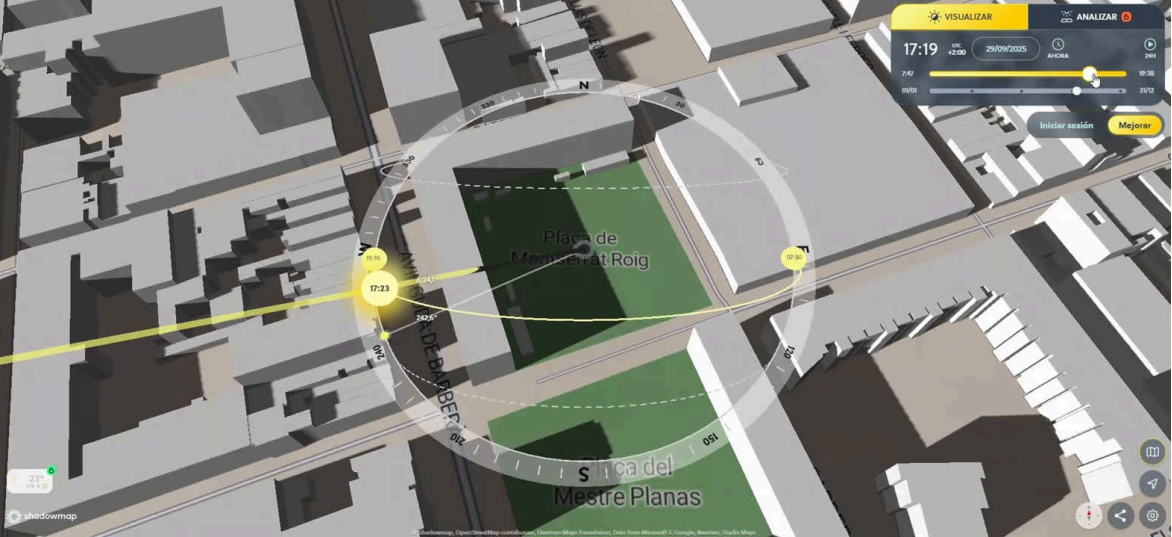
The square is physically linked/aligned with Plaça Mestre Planas , which ensures pedestrian continuity and supports events planning.
This area resembles an Eixample-type zone, characterized by a mix of residential and street-level services. You can find cafes, grocery stores, and various services all at street level, creating a convenient atmosphere.
Transport: Bus stops are located nearby
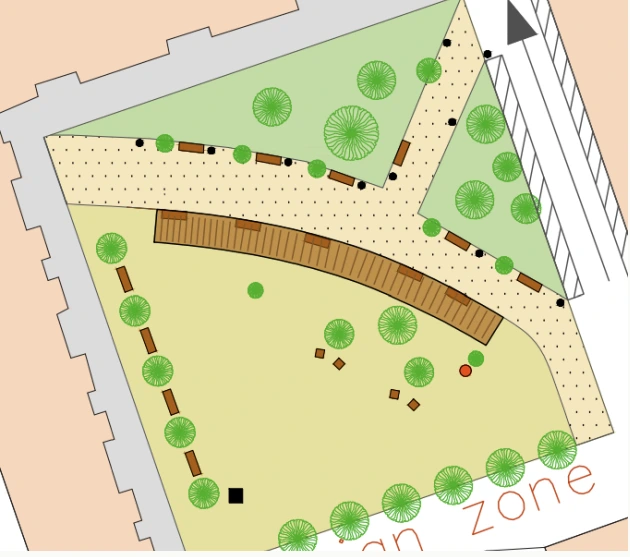
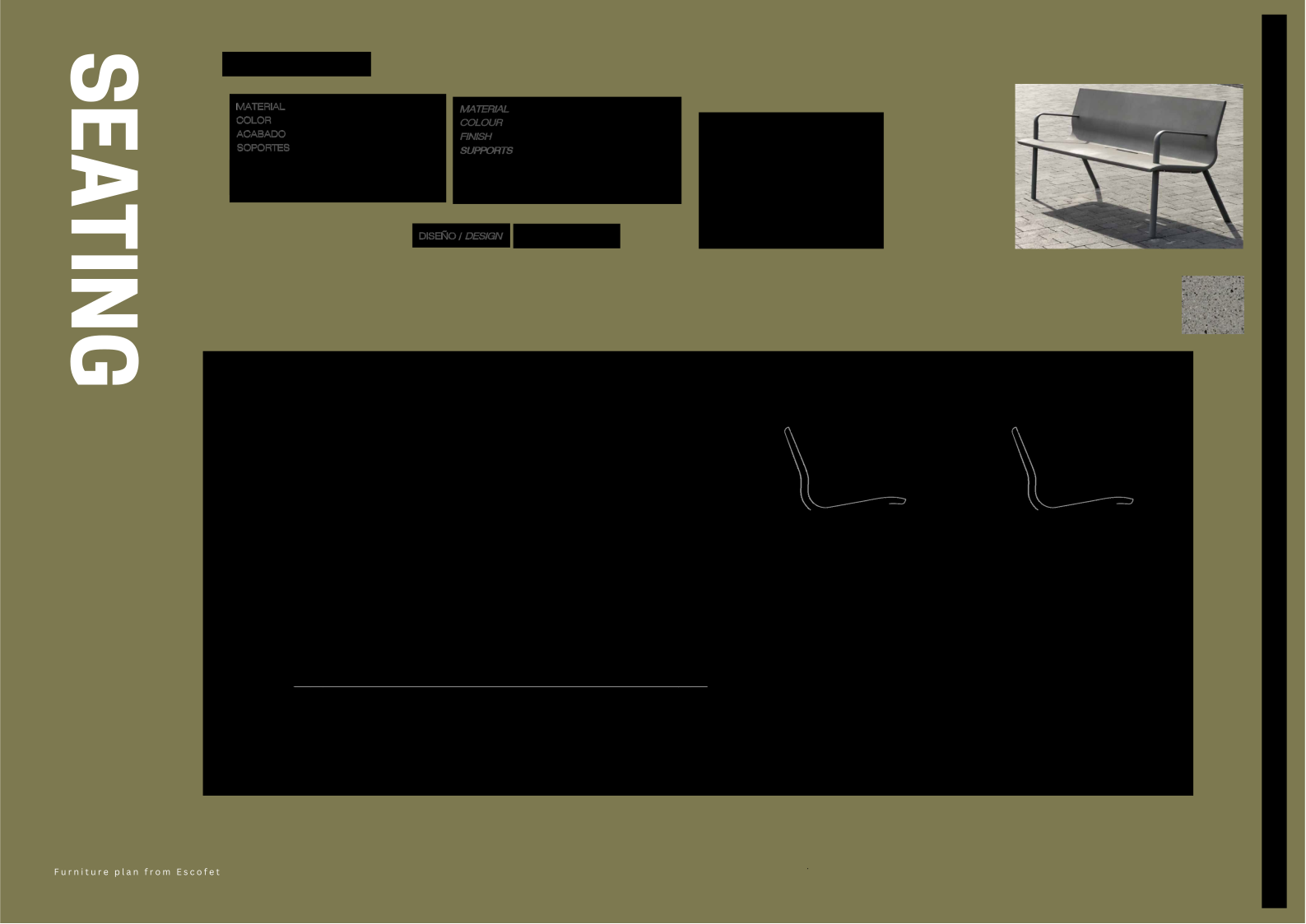
Seating : The park's seating area is comfortable and well-distributed, making it inviting for relaxation and social interactions. The seating encourages observation and contemplation, fostering a sense of community.
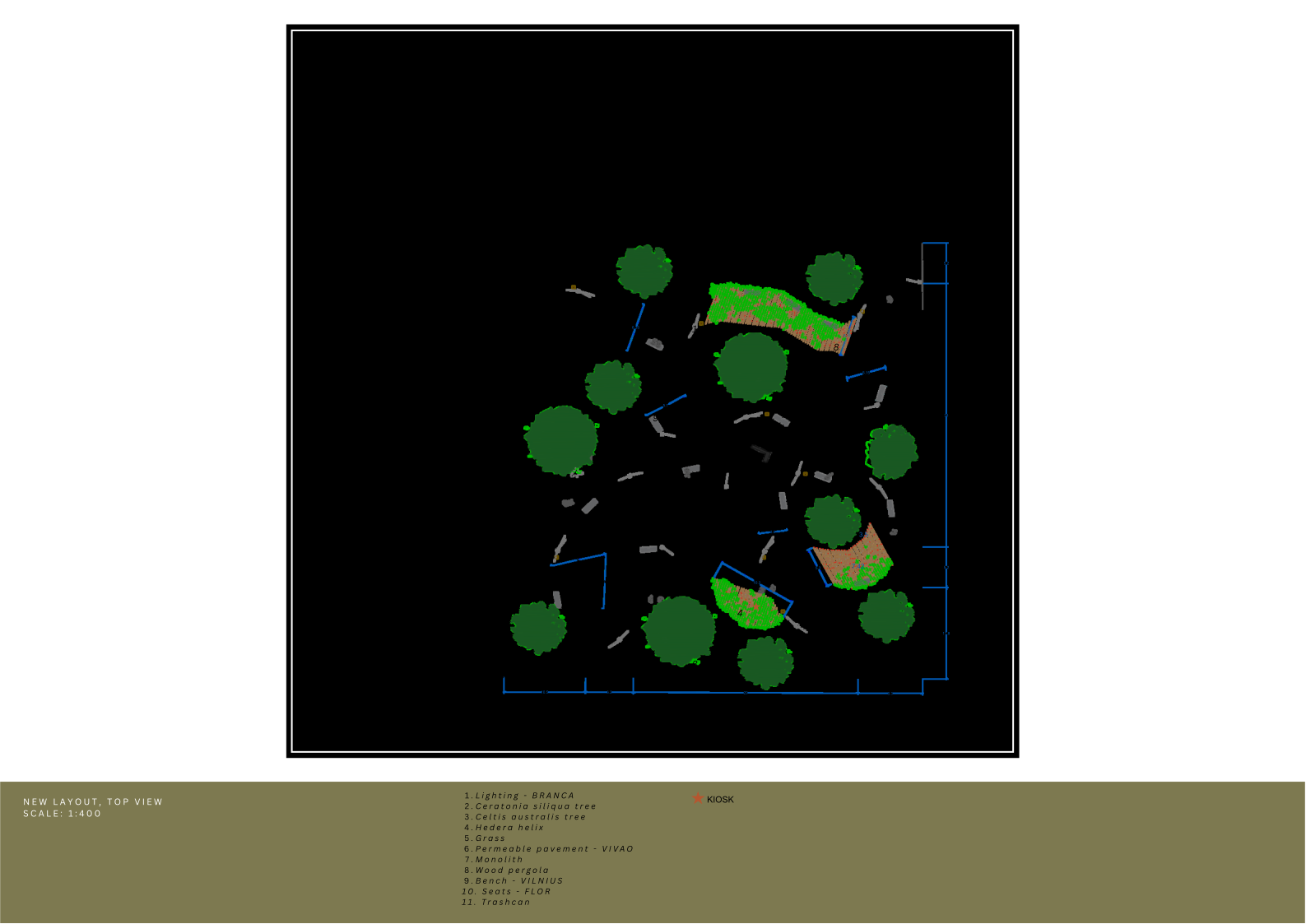
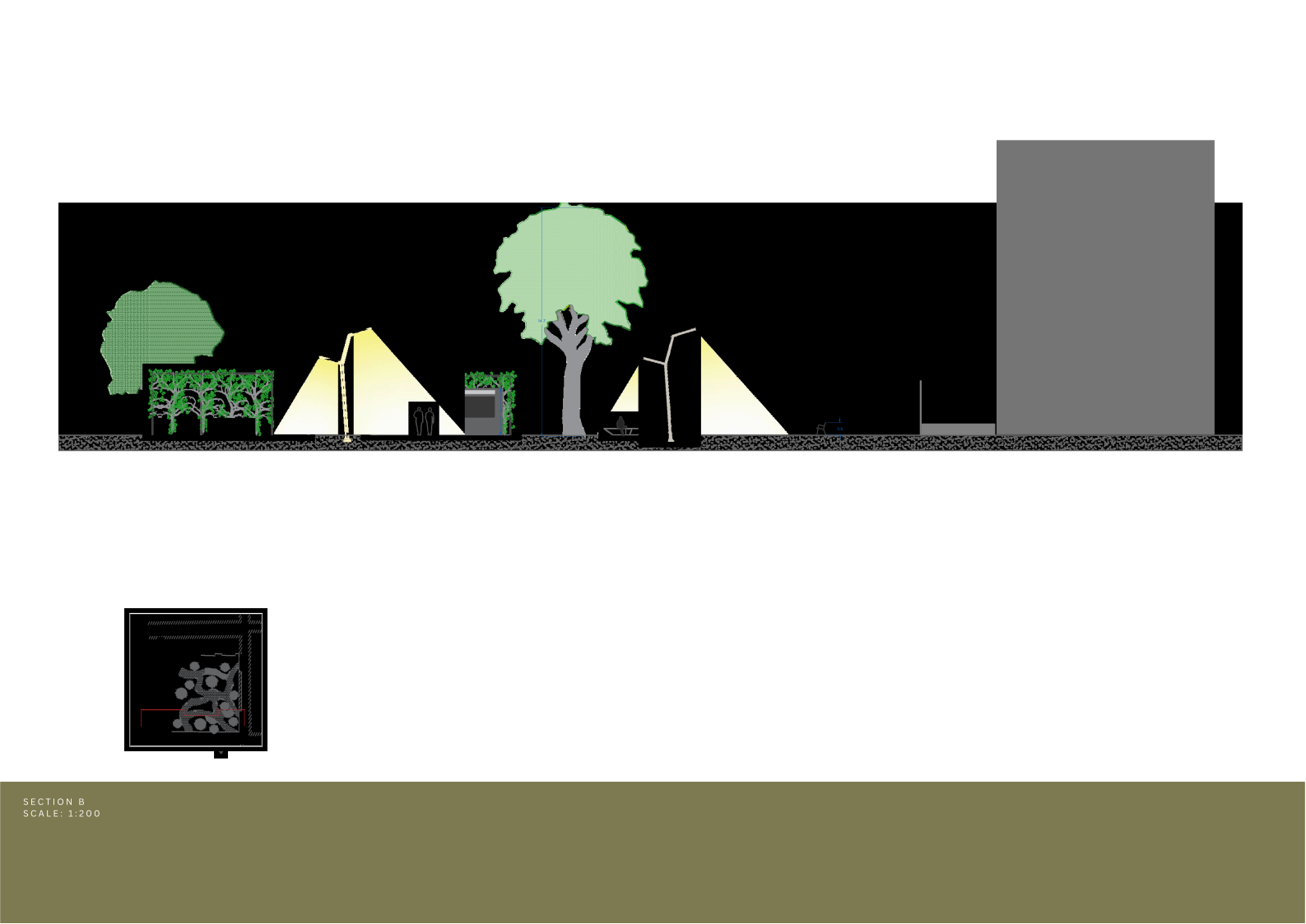
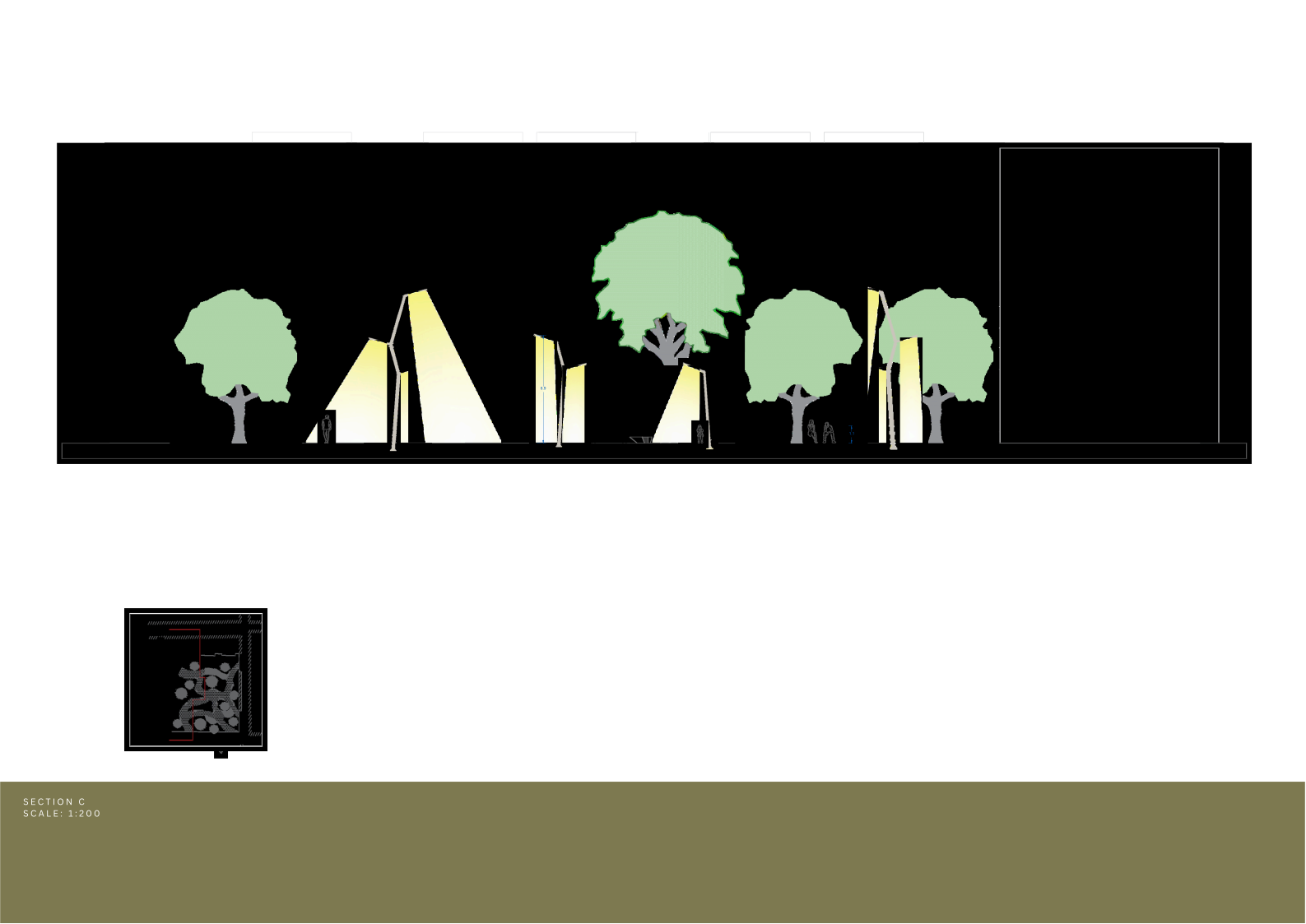
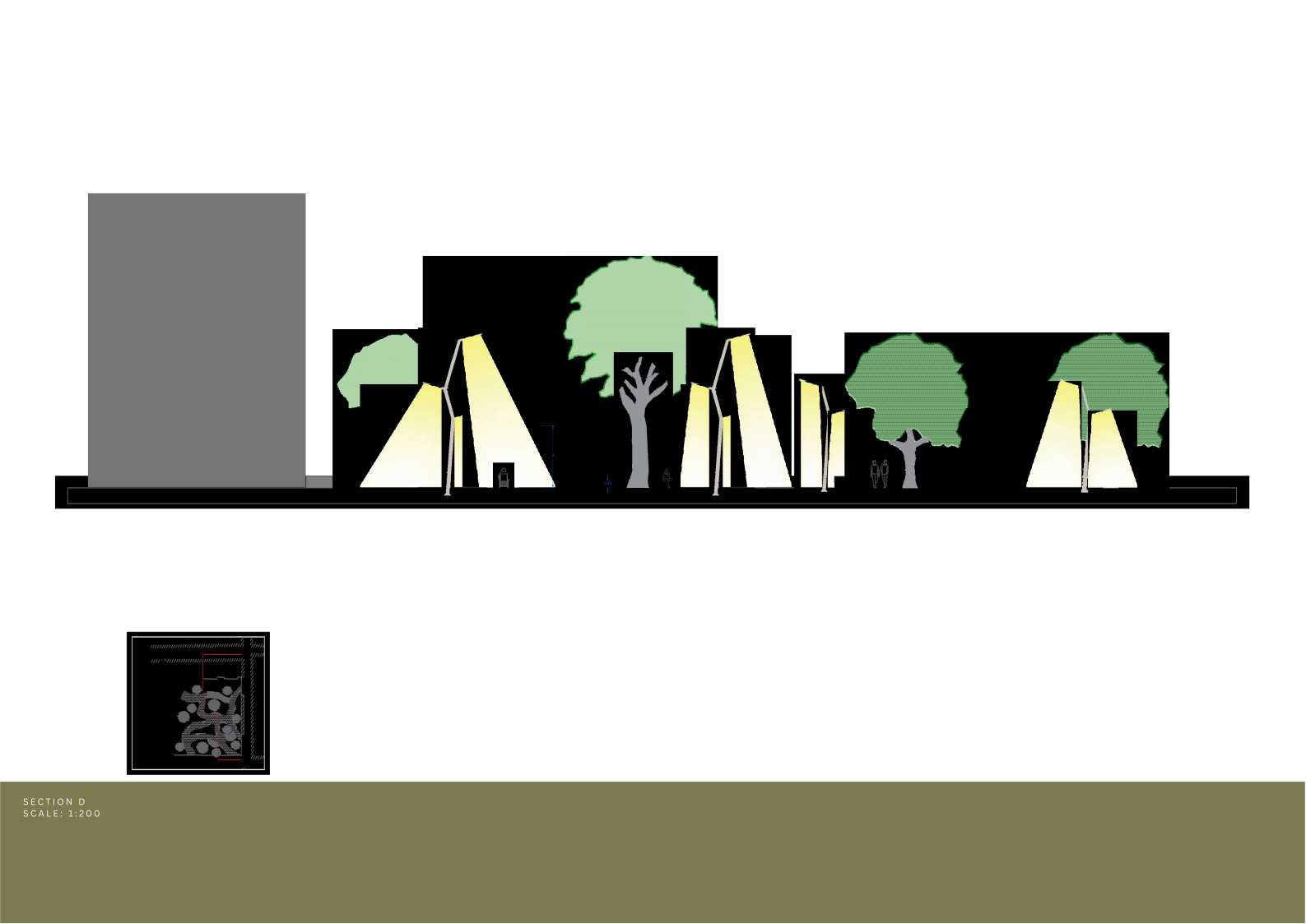
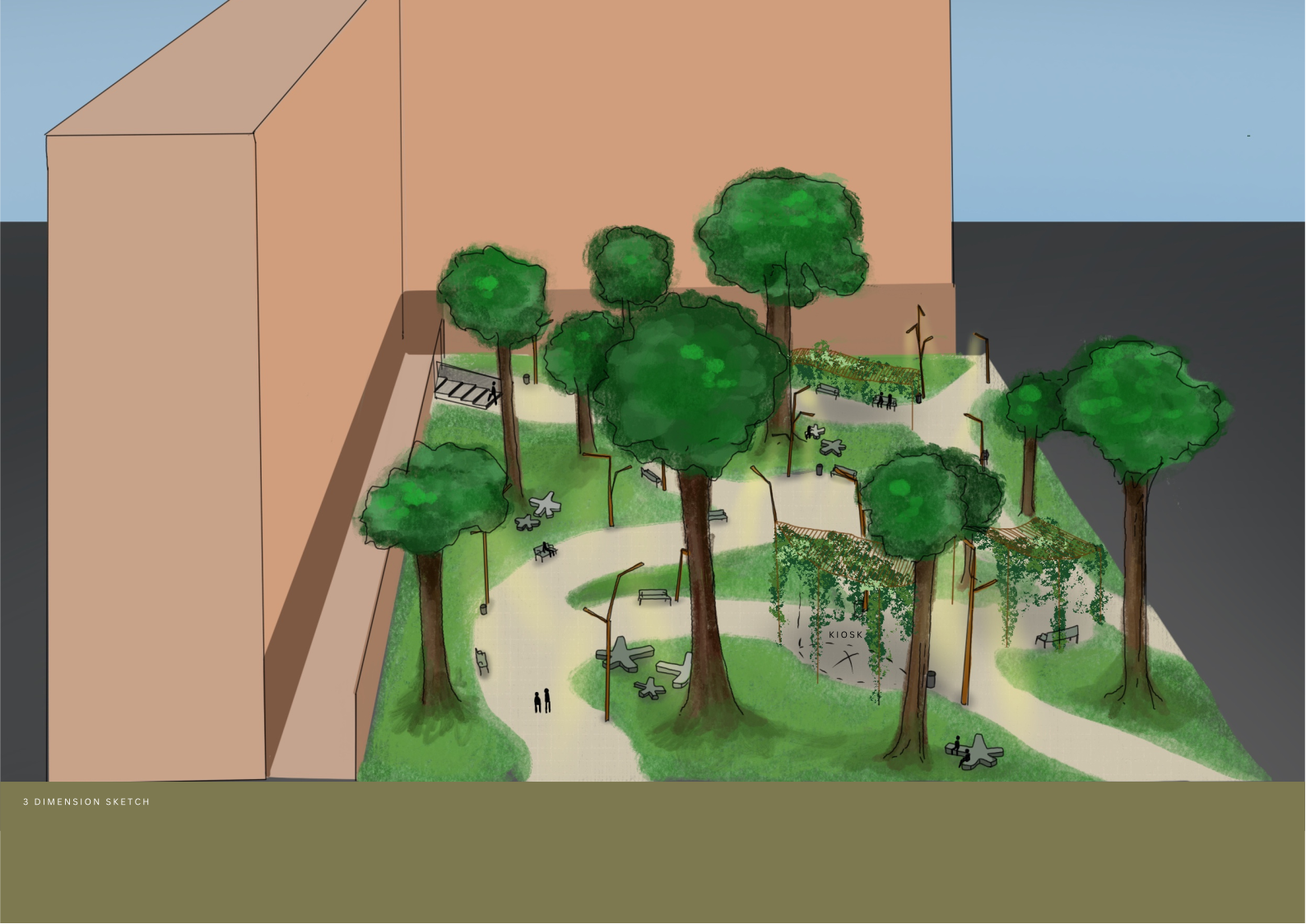
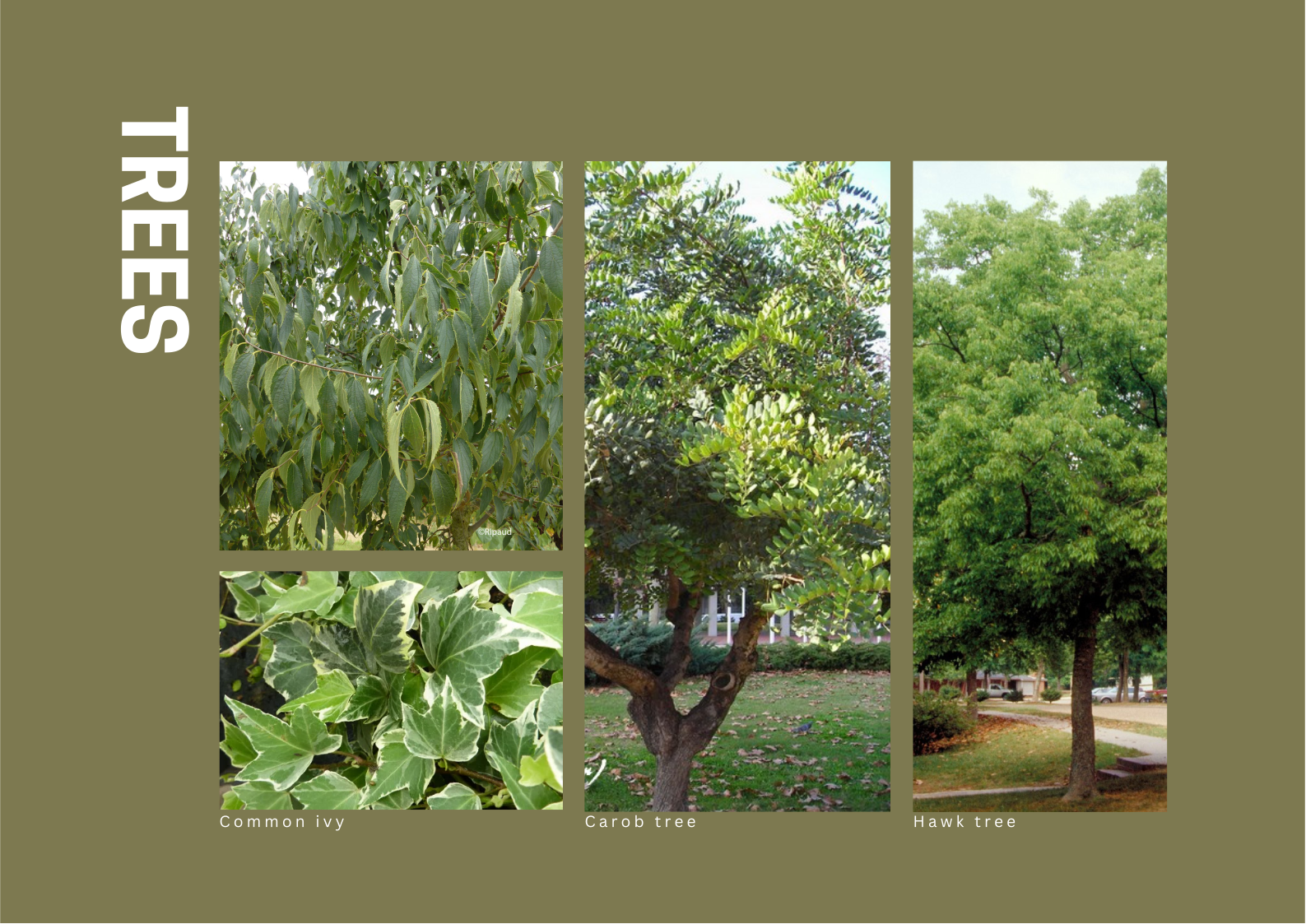
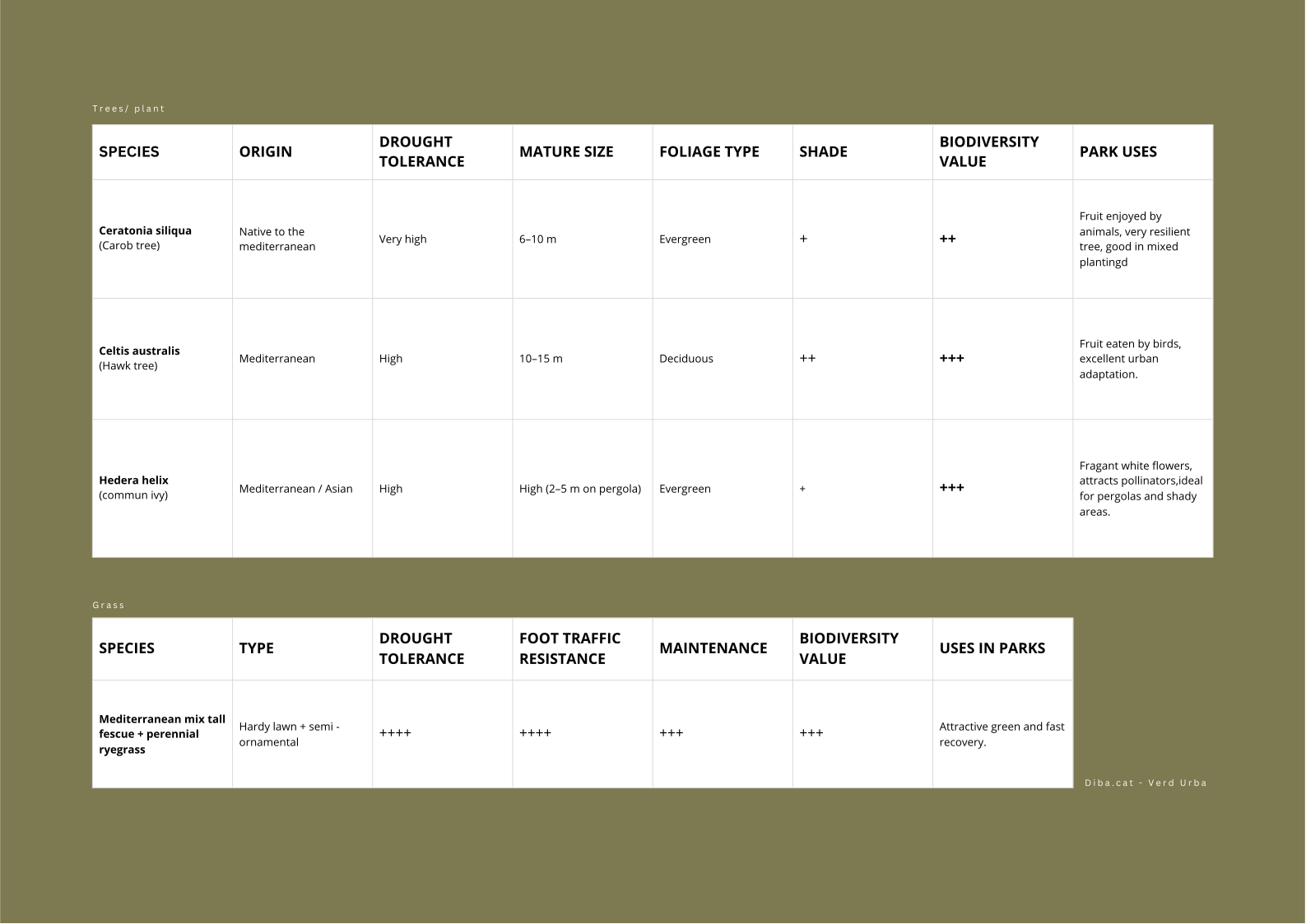
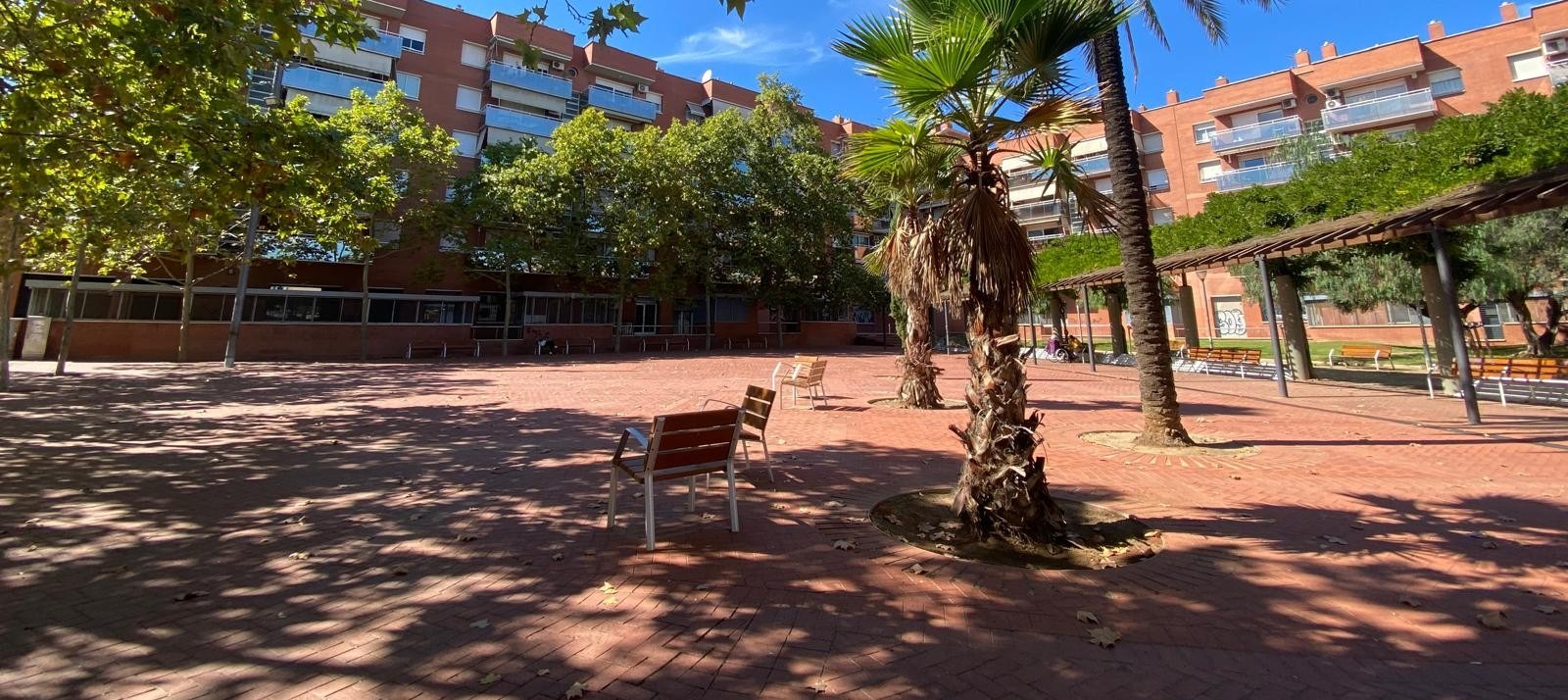
Vegetation: Trees are placed to provide shade and define zones, they create a visual barrier and balance the space. The presence of grass as a soft surface helps absorb rainwater, supports small wildlife, and adds to the overall aesthetic.
A pergola, serving as a shade provider and visual focus, contributes to the architectural character of the flat space.
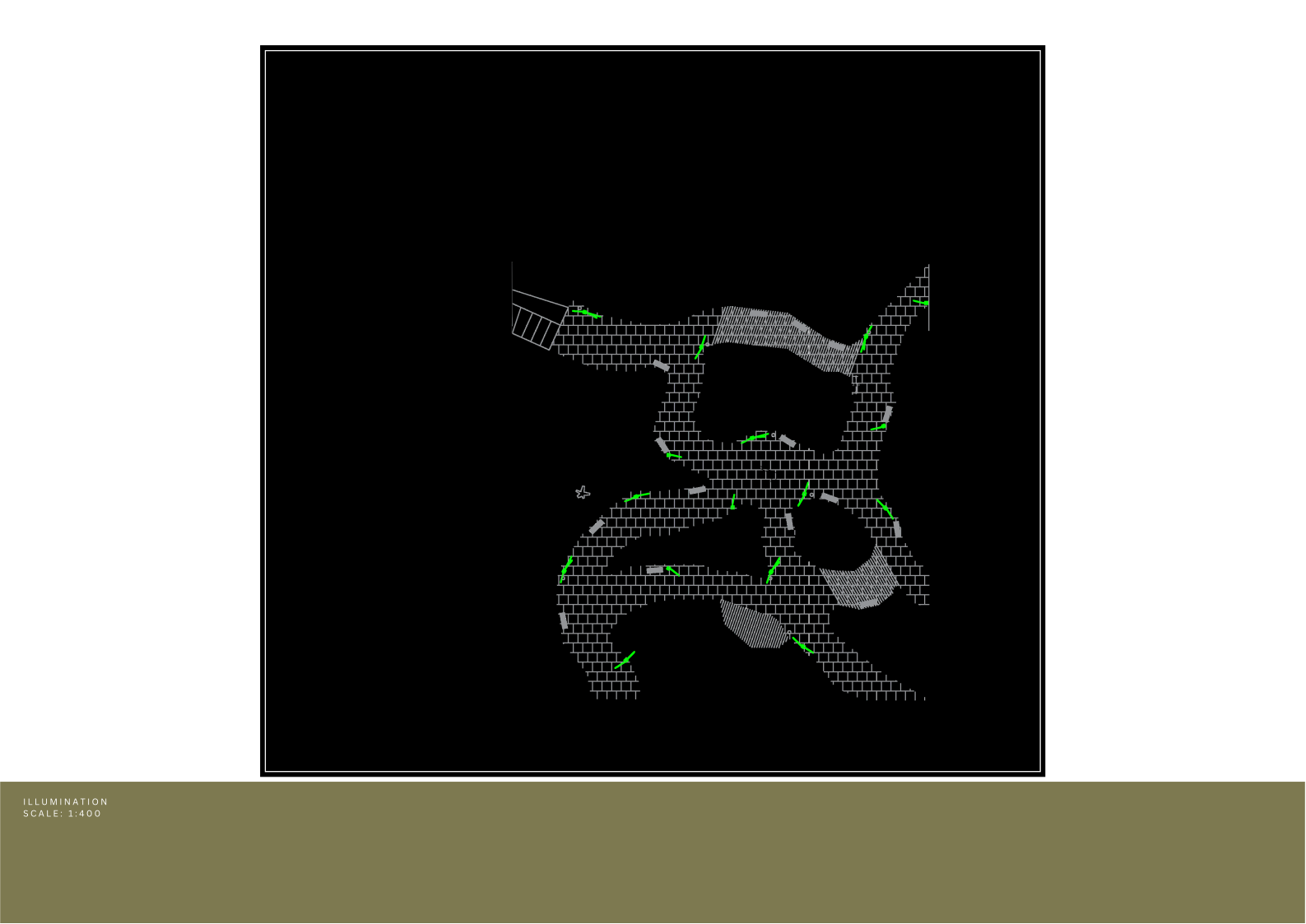
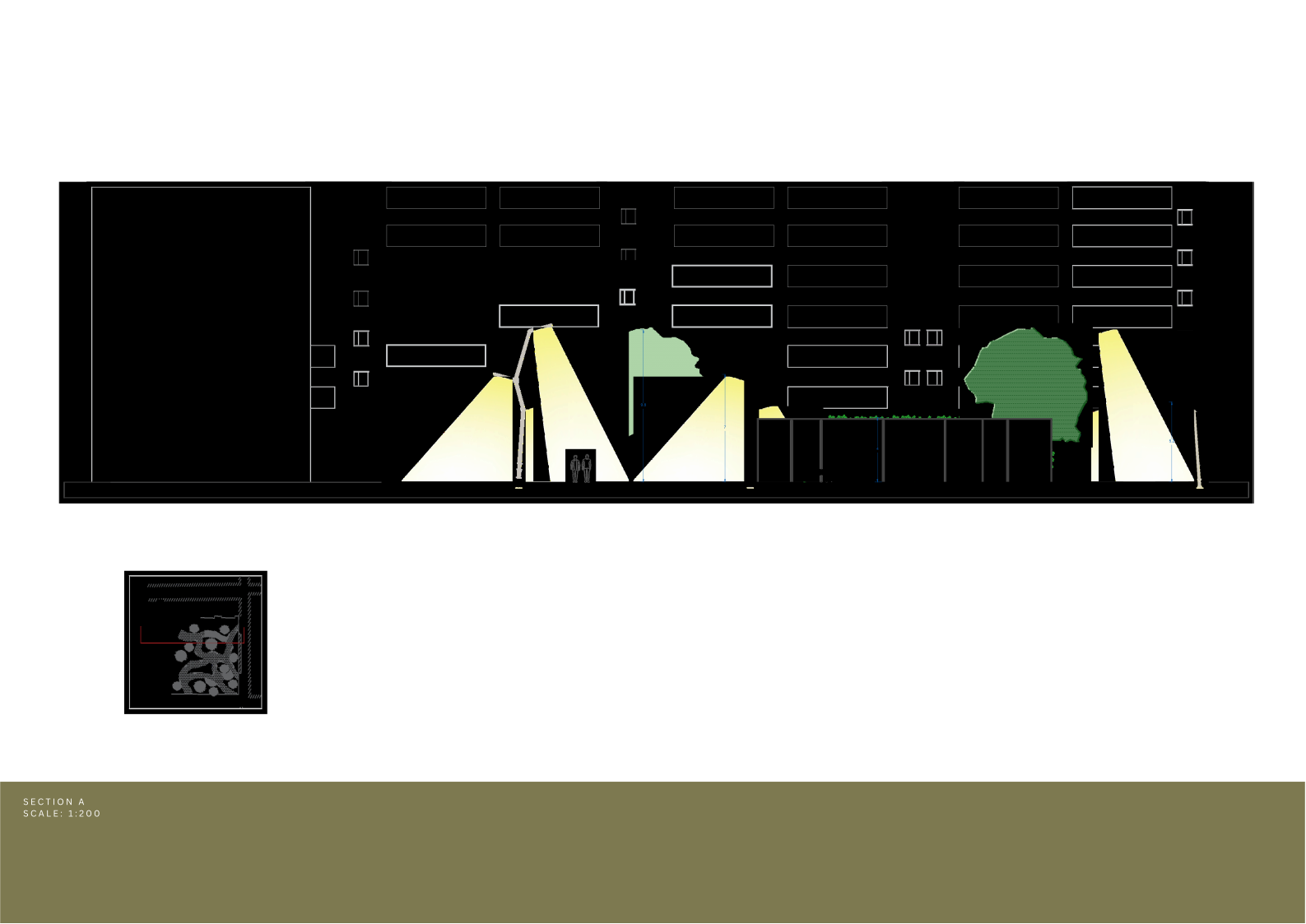
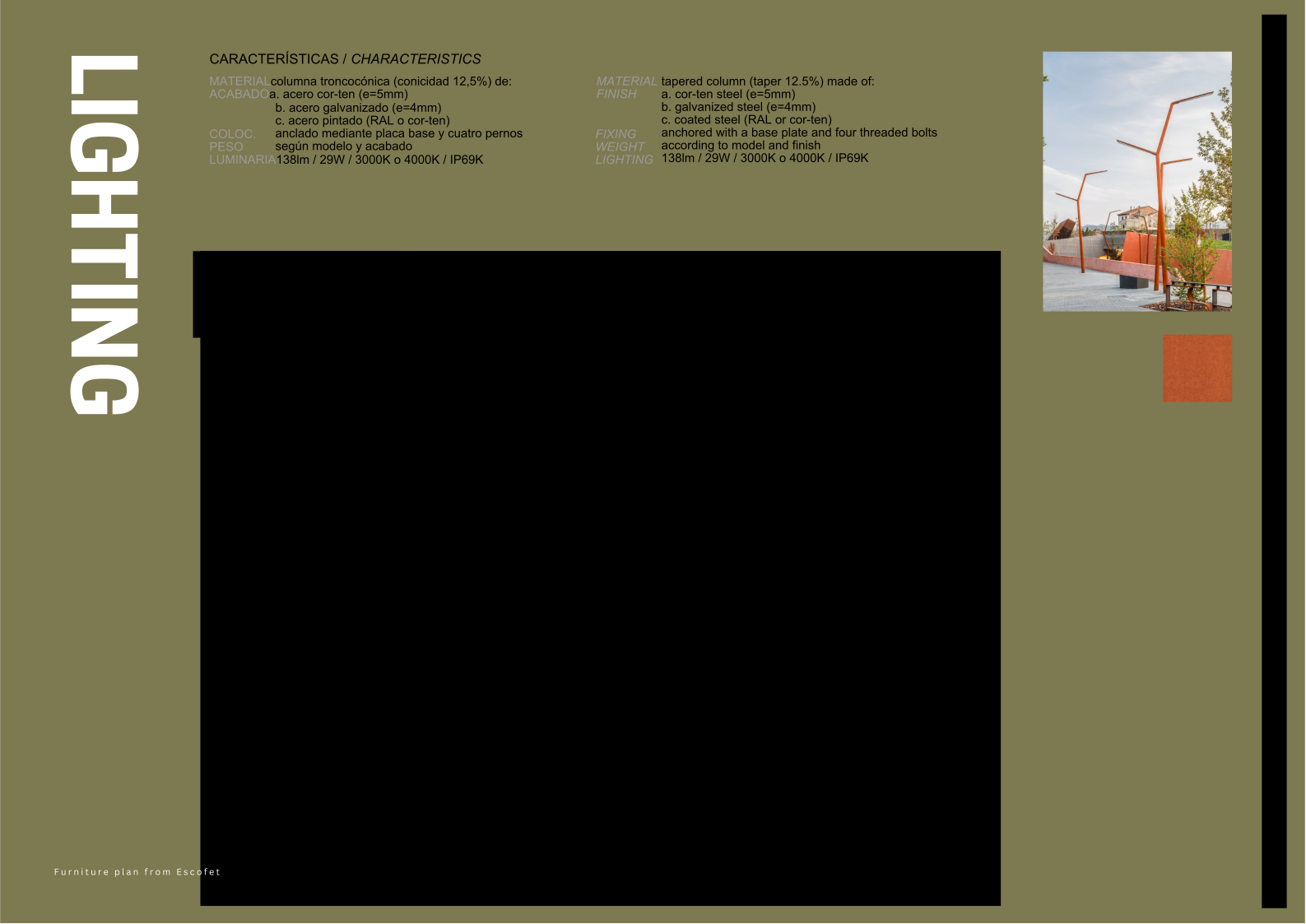
Lighting: Functional and simple, with small light posts placed along the main path for ambiance and safety. The floodlight in the plaza adds a warm and welcoming glow to the space, balancing functionality with aesthetics.
In addition there is a water fountain, providing a clean water source for park visitors. The park also has a basic drainage system to manage water runoff. As for trashcans, they are insufficient in number relative to the park's size.
ABOUT THE SPACE
Montserrat Roig i Fransitorra (1946–1991) was a Catalan writer, journalist, and feminist whose work highlighted the social and political turmoil in Catalonia and the broader Spanish context. Her most notable book, "Els catalans als camps nazis" (Catalans in Nazi Camps), published in 1977, gathered the testimonies of Catalans who were deported to Nazi concentration camps during World War II. This work became a cornerstone for preserving the memory of victims of fascism and the Franco dictatorship.
The parc named after her serves as a tribute to her contributions to speech, memory, and free expression. This public space, which was recently (2019) expanded to merge with the neighboring Plaça Mestre Planas.
PARC RENOVATION | Plaza Montserrat i Roig in Sabadell, Barcelona
NOVEMBER, 2025
RENOVATION
Daily life at Plaza Montserrat i Roig is a mix of structured routines and spontaneous interactions. Regular users, such as those socializing in the same spot regularly, value companionship and the sense of belonging. Their behavior is marked by low mobility and long stays, emphasizing bonding rituals.
The kisok sells a selection of everyday items such as snacks, drinks, magazines, tobacco reated products, lottery tickets, and basic convenience goods.
(based on user behavior)
USER BEHAVIOR
Daily life at Plaza Montserrat i Roig is a mix of structured routines and spontaneous interactions. Regular users, such as those socializing in the same spot regularly, value companionship and the sense of belonging. Their behavior is marked by low mobility and long stays, emphasizing bonding rituals.
Children, on the other hand, transform the plaza into a playground, engaging in high mobility activities like football. Their presence injects energy and noise, redefining the space through active play.
Domestic pairs, possibly returning home, use the plaza as a decompression spot, engaging in more passive behaviors like passing through. They might also use the plaza to supervise children in the playground area, multitasking between care and conversation.
Inclusive users, such as those with disabilities, occupy accessible zones, seeking social connection and observing their surroundings. Their physical activity is limited, reflecting a more sedentary lifestyle.
Dog walkers, a routine group, follow a familiar ritual, circulating the plaza and repeating their visits. They may snack or socialize in groups, often interacting with other users.
Regular users of the square: socializing in habitual spot | routine, companionship, leisure | fixed location, low mobility, long stays, bonding ritual Children playing (football) | active users of open space | physical activity, peer play | high mobility, use entire plaza, create noise & energy Domestic pair, maybe returning home, decompression | passive users, transitional behavior (passing through) Parents & children (playground area) | core users of plaza | supervision, socializing | semi-static | occupies seating, multitasking between care & conversation People with disabilities (wheelchairs) | inclusive users | accessibility, social connection | occupying accessible zones, observant, less active physically Dog walkers | routine users | pet walks, social ritual | circulating users, repeat visitors IMPORTANT POINTS: Snacking / more people in group than alone / timing / people coexist, interact less
Key insights: Snacking is more common in groups than alone, suggesting a social aspect to food consumption. The timing of visits also plays a role, with more people coexisting and interacting less during certain periods. These dynamics underscore the need for a kiosk that supports both the social and practical needs of all users, enhancing the plaza's functionality and inclusivity.
This project involved a collaborative analysis and redesign of Plaza Montserrat i Roig, where we first assessed the space and deduced the design intentions of its original architects. Following this, we individually proposed reforms and, designed a kiosk for the redesigned parc.
in collaboration with Yasmin Hamouche
FIXTURES
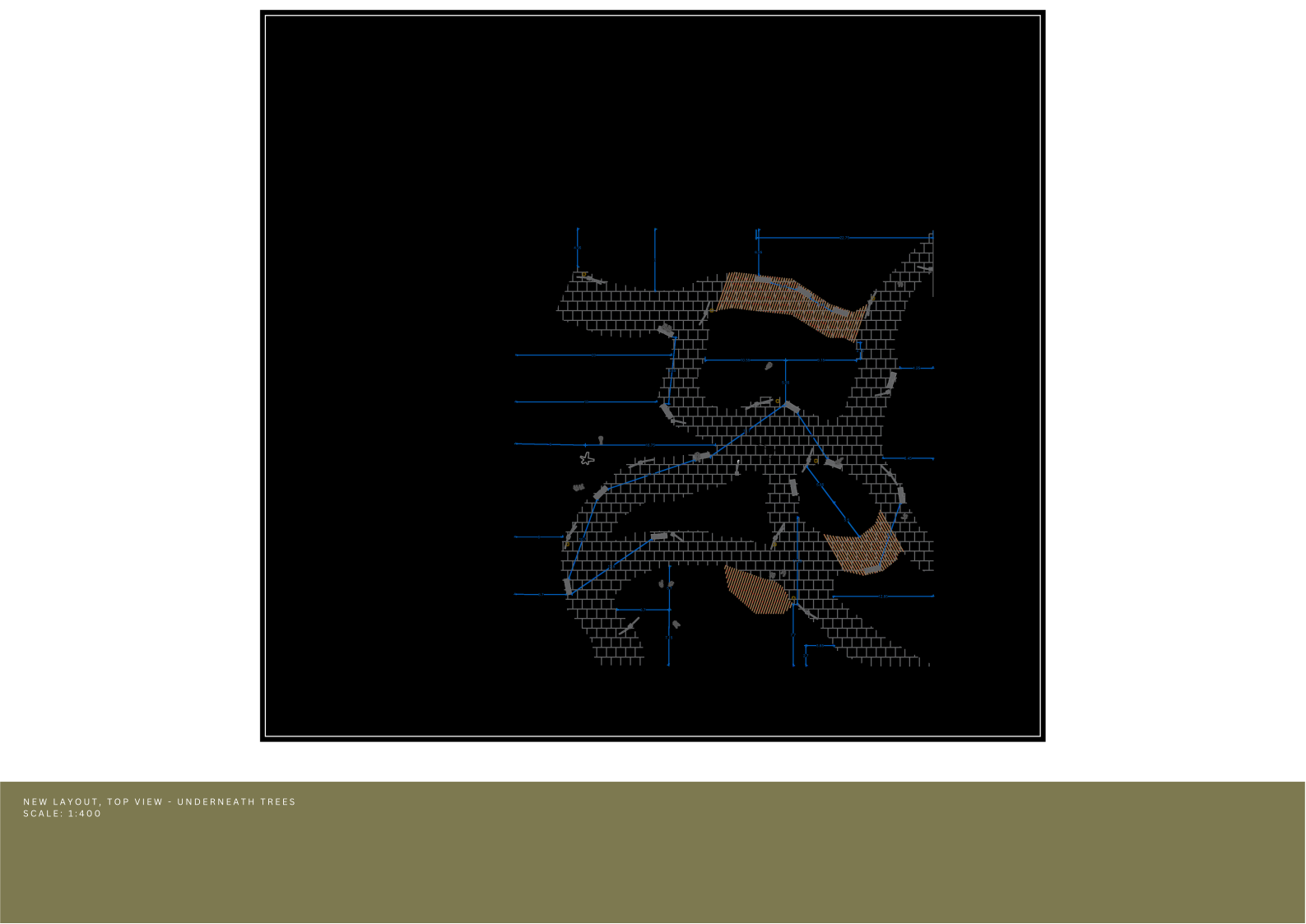
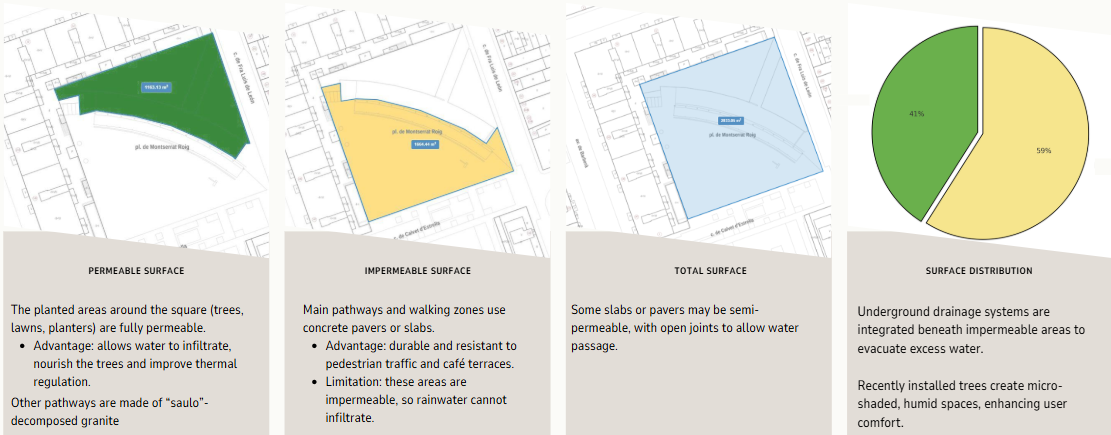
PERMEABILITY
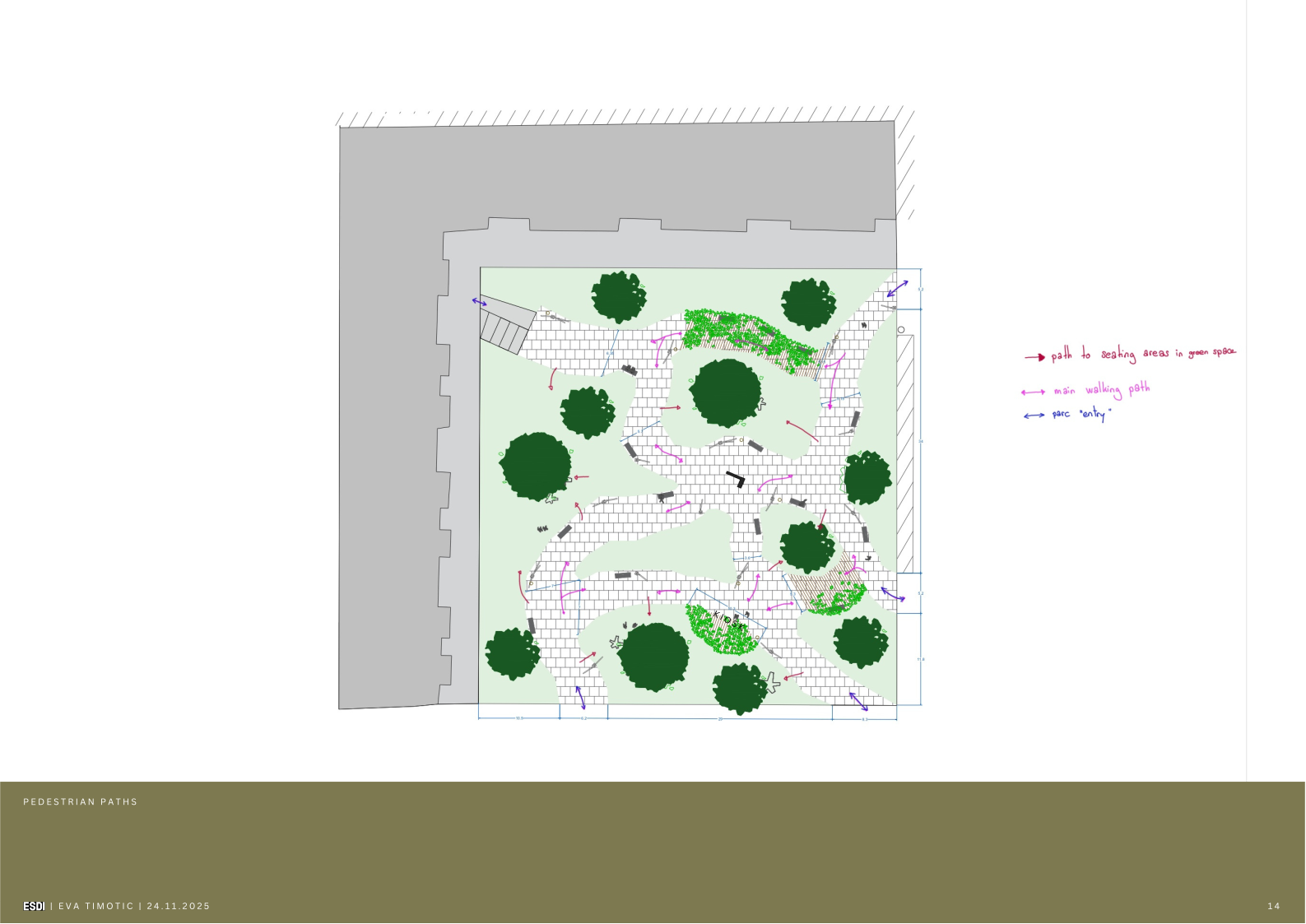
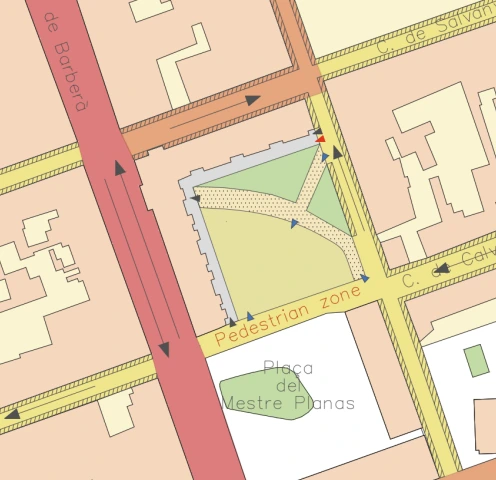
CIRCULATION